TUSCIA
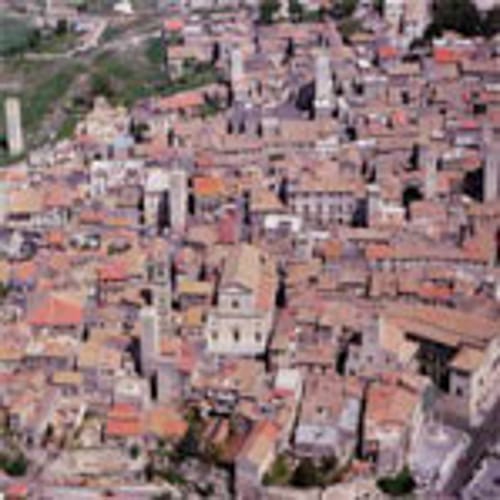
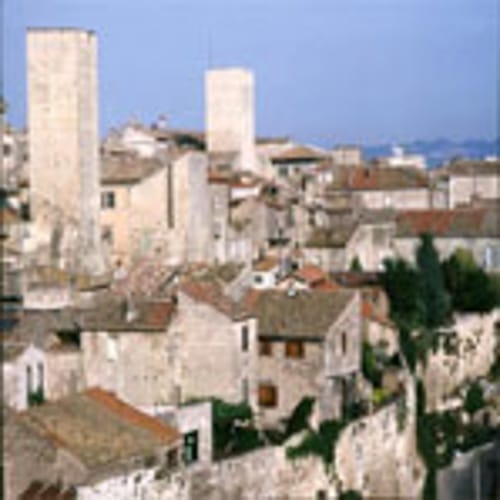
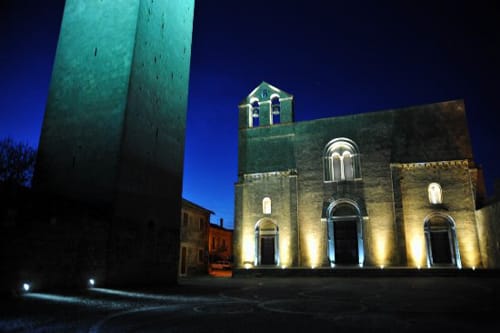
Tuscia it was the name attributed to’Etruria after the end of the etruscan domain. It is a the vast territory that stands out for its wild placesdue to the presence of important archaeological sites, charming medieval villages, villas and gardens of sixteenth-century and for its the unique flavors.
The kitchen in the Tusciain view of the particular geographical position of this region, can be considered a successful mixture of tastes, smells and simplicity that we refer to the roman kitchen, tuscany and umbria. The dish traditional l’acquacotta composed of four fundamental elements: bread stale, wild vegetables first of all, the wild chicory (together with potatoes, tomatoes, onion, mint and extra virgin olive oil.
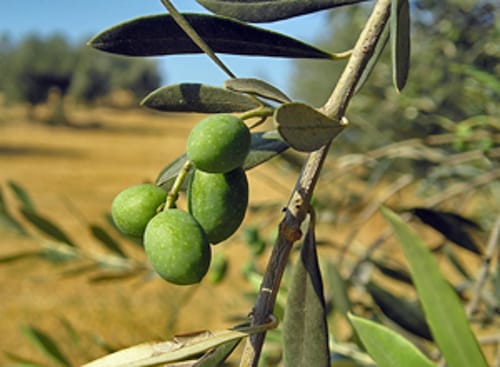
The province of Viterbo has 6 D. O. C. wine including the Tarquinia, the EAST! EST!! EST!!! and the Aleatico di Gradoli. L’extra virgin olive oil is one of the products of the Tuscia most popular in Italy, the Canine D. O. P. it is the variety of extra virgin olive oil, more flavorful and known in the area. Let us not forget the hazelnuts and the chestnuts the Monti Ciminithe lakes fish (tench, perch and whitefish), l’anguilla Bolsena and mushrooms: the porcini that grow mainly on the slopes of the The Monti Cimini and ferlenghi abundant in the area Tarquinia and Monte Romano.
Tarquinia, and...
The Lido
Tarquinia Lido, situated 5 Km from the city features a sandy beach, and numerous infrastructure functional. The beach town is full of hotels, number of villas and plants campeggistici and sports, surrounded by pine forest and overlooking the beach.
Gravisca
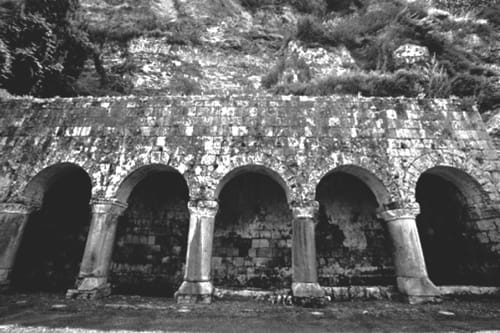
On the coast, in the vicinity of the Porto Clementino, are the remains of the emporion etrusco di Gravisca. Also visible are the remains of an important shrine, is located at the edge of the roman colony in 181.C., on the ruins of an earlier etruscan settlement. The shrine, attended by 600.C. in the III century.C., it is divided into various buildings of worship dedicated to the Greek gods and etruscan.
Porto Clementino
The impressive ruins insinuate themselves into the sea, and testify to the presence of an ancient structure of the port: the port of the roman Gravisca rebuilt and upgraded under the pontificate of Pius II (1458-1464), was defended by a circular tower, the remains of which, due to the retreat of the coast line are finished in the sea. The name comes from a renovation carried out by Clement XII, in the EIGHTEENTH century. It was destroyed in the course of the second world war.
La Civita
The etruscan city of Tarquinia in the etruscan Tarkna) was located about ten kilometres from the coast, where it was located Gravisca, the main port, a major trading centre in the Mediterranean. The town was occupied, in extension, about 140 acres, was situated on a hill, named Pian di Civita, overlooking the valley of the Marta river, outlet of lake Bolsena and navigable from the sea up to the town of Pian di Civita is divided from the coast of the long and parallel to the hill of Monterozzi, the seat of the necropolis historical and on the western spur is the first installation of the medieval city of Corneto, and today's Tarquinia. The geographical position contributed to its flowering and its affirmation as the etruscan town and had easy contact with the hinterland through the valley of the river Marta. Its territory was in a strategic position between the territories of two other powerful city?state etruscan Cerveteri to the south, and Vulci, in the north.The landscape of the countryside of tarquinia, geologically very complex, distinct from that of the other towns of Etruria, mainly located in territories of tufa. On the plateau of Pian di Civita you can see the base of the temple called the Ara della Regina", dating back to the IV century.C. the decoration of which the city formed part of the Winged Horses, now on display in the National Museum of Tarquinia.
The Necropolis
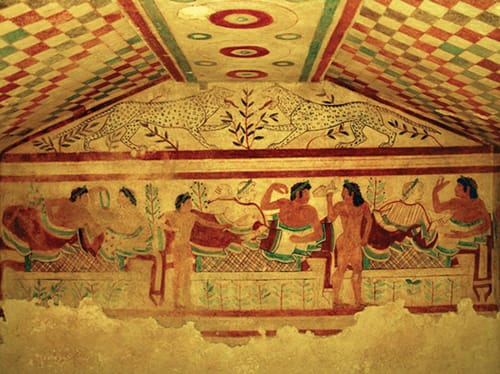
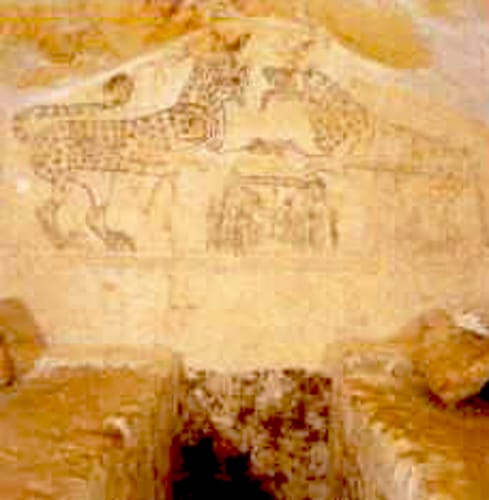
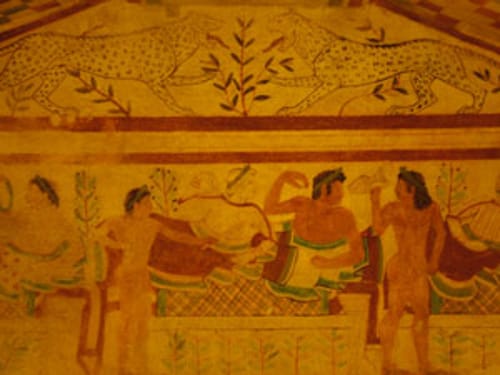
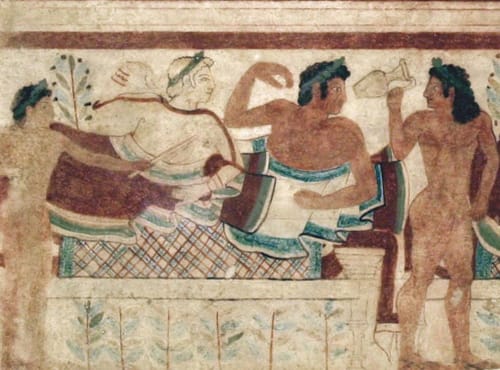
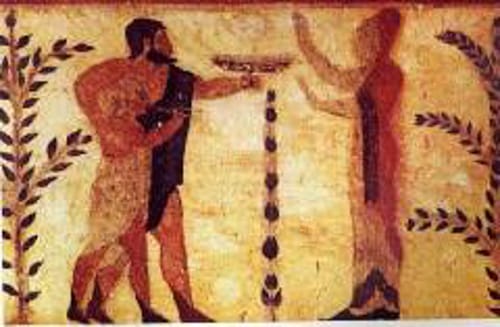
The painted tombs represent a particular aspect of the artistic culture of the etruscan, the only example of wall painting, ancient, known through the testimony of the sources. The frescoes in the painted tombs of Tarquinia are one example of the contemporary, contemporary of the great Greek painting, come down to us. Today you have knowledge of 180 etruscan tombs with wall paintings: 140 is located in Tarquinia. Only Tarquinia offers us a large number of monuments from the archaic period (sixth century.C.) descend until the end of the republican age of rome (the met?The century.C.), revealing in this city, the existence of a thriving and uninterrupted tradition of painting. This huge asset to not only artistic but also represents a cross-section on the life of 3,000 years ago, and was inserted by the 2004 Unesco in the World Heritage of Humanity. Currently they are accessible 19 hypogea in the portion of the cemetery is open to the public, in the locality of Calvary. From the month of march to October are open exceptionally, with the collaboration of the Municipality, four of the hypogea of the most well known: the tomb of the Bulls, of Wishes, of the Baron, and the fondo Scataglini, accessible by guided tours.
The National Etruscan Museum
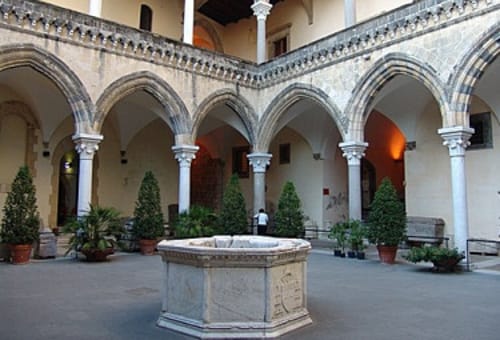
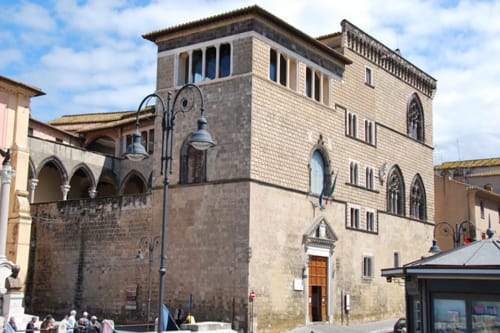
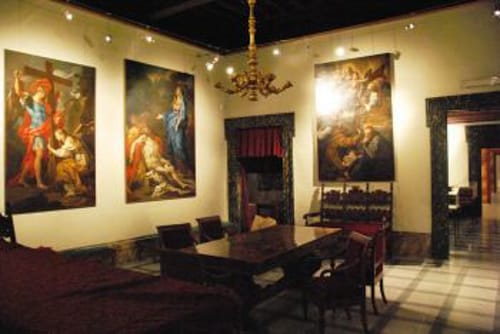
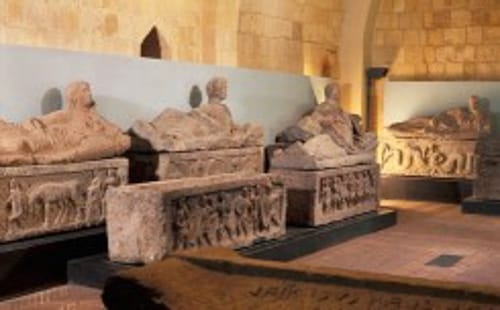
The National Etruscan Museum is housed in the Palazzo Vitelleschi, dating back to the FIFTEENTH century. The exhibition is located on the three floors of the building. The rooms on the ground floor can accommodate, in chronological sequence, the stone material in the collections of the museum, including sarcophagi, dating from the first half of the IV century.C. By emphasizing the hall 10 that contains the sarcophagi of greater value, some of which are carved in Greek marble, which belonged to some of the families in the Tarquinia half of the fourth century.C.: the Partunu on The first floor are exhibited objects from the excavations of the necropolis. The tour starts from the last room of the gallery where I collected the most ancient, dating back to the Villanovan period (IX-VIII century.C.) The following rooms are arranged in chronological order, and then proceeding, you can admire the remains dating from the orientalizing period ( the end of the VIII-VII sec. to.C.); the vessels imported from Greece by the end of the EIGHTH to the sixth century.C.; the ceramica etrusco-corinthian that the etruscans were produced in imitation of the Greek, and the bucchero, the typical etruscan ceramics, economic reproduction of the china the bronze. To follow the ceramics import from Attica, made with the technique of the black-figure and red-figure, dating from the sixth century.C. In a showcase of the Beauty of the Holidays is gathering a selection of coins etruscan bronze, cast and minted, and the gold coins dating back to the late roman empire, found in the excavations of the roman colony of Gravisca, deducted in 181.C. By proceeding in the following rooms you can admire the exhibits of local production, both ceramic and metal mirrors, balms, furnishings. In the last room they collected the ex-voto, the gifts offered to the deity or to receive grace, or the grace they have received, from the sanctuary of the altar of the Queen. On the second floor there is a porch square from which you can enjoy a magnificent view of the city and the countryside. In a group of the air-conditioned rooms are preserved in the paintings of some of the tombs branch: Triclinium, the Roman, the Olympics , the Ship. In the hall of Arms are exposed Winged Horses, high-relief clay dating to the fourth century.C., that was part of the decoration of the temple of Ara della Regina. Complete the exhibition is a selection of pieces found in the great excavations of Tarquinia, which is managed by the University of Milan with regard to the etruscan city and the University of Perugia with regard to the site of emporion and the port of Gravisca.
Saline
The Natural Reserve of Animal Population "Saline di Tarquinia" was established in 1980, with the purpose of safeguarding the environment and to promote the repopulation of some species of animals. The area covers around 170 hectares, covering a coastal area in the town of Tarquinia, from the mouth of the River Marta, and the Mignone River; it presents itself as a wetland area of great natural value, a character in the prevalence sandy, which displays the typical vegetation of the coastal dune and the environments of the salt. It is possible to observe different species of birds, resident and migratory: little egret, grey heron, the pink flamingo, the knight of Italy and the squacco heron. The village of saline di Tarquinia started to rise at the end of the NINETEENTH century with the aim of achieving an appropriate settlement to house the workers who were working inside the plant. In addition to the buildings, made necessary the construction of a garrison of guards with the purpose of surveillance, a home for executive offices and administrative, of a monumental building for the shops and the pub. No less important was the building of a school and a building leisure. In the first three decades of the TWENTIETH century were built the last of the buildings in the village: the church, the cistern for the water supply and the building of the "Get selected".
The Roccaccia
The Roccaccia is the green lung of the city and consists of about 1200 hectares of forest, occupied mainly by coppices of oak with various hardwoods and plantations of conifers. Natural pasture of the maremmana cattle from a gray coat and lyre-shaped horns, the Roccaccia is so called in memory of the ancient castle Jorii", a medieval castle, destroyed by the cornetani in the course of the FOURTEENTH century. The Roccaccia is the work place of the cowboy, the legendary figure involved in the livestock that is always with passion and dedication, care, riding wonderful horses, the herds in the wild, plunged into the thick of the woods. Since 2009 there has been made the trail - naturalistic "Wick", addressed to schools of every order and degree, and anyone who wants to enjoy the wonderful show that offers the pristine environment.
Food and wine
An Outline Of The Territorial
Next to the historical and archaeological plays an important role in the production of vegetables, fruit, and food and wine. Among the most famous products cultivated in the fertile plains local deserve a particular mention to the artichoke, tomatoes, peppers, fennel, and asparagus. Typical of this area of Tuscia, particularly appreciated to create great dishes, it is the mushroom Ferlengo (pleurotus ferulae) that grows naturally in the limestone earth. The typical dishes that you can enjoy are the vegetable soup, known as the soup of the cowboy; meat dishes or fish dishes and traditional desserts such as Easter pizza from the characteristic scent of cinnamon, the panpepati and Christmas cookies made of dried fruit. Productions emerging, worthy of mention, are the wine with excellent red and white doc, the beekeeping, production of pasta made with durum wheat in the maremma, the breeding of snails, and of the cultivation of lavender is widely used in various sectors of production.
Wines
THE DOC WINES OF TUSCIA:
- Aleatico di Gradoli
- Tarquinia
- Orvieto (of which the production area extends for a large part, in the province of Viterbo)
- Est!!! Est!! Est!!!
- Colli Etruschi Viterbesi
- Vignanello
- Cerveteri (for the province of Rome)
IGT WINES OF TUSCIA:
- Civitella d'agliano
- Colli Cimini
- Lazio
Oil
EXTRA VIRGIN OLIVE OIL PDO:
- Canine: it is obtained from the olive variety Canino, Leccino, Pendolino, Maurino, and the Mill. The production area is located in the province of Viterbo, and includes the entire surface of the following Municipalities: Canine, Arlena di Castro, Cellere, Ischia di Castro, a Farnese, Tessennano, and part of the surface of the municipalities of Montalto di Castro Tuscania.
- Tuscia: it is obtained from olives of the three varieties (Mill, Canine and Leccino) present for at least 90%, either alone or in combination, depending on the production of individual olive groves. It admits the presence of other varieties (Leccino and Pendolino) in the maximum percentage of 10%. For this reason, you can have small variations depending on the area of collection.
Typical Products
CHEESE: Sweet Caciotta of Tuscia, Pecorino, g, Pecorino romano PDO cheese, Ricotta della Tuscia.
FISH LAKEAnguilla Bolsena, Whitefish Lake Bolsen
MEAT: Lamb of Tuscia, beef maremma, Rabbit Green "Filmed of Viterbo".
MEATS: Capocollo della Tuscia (or loin), Cup of the head of Tuscia, Pillow of Tuscia, Porchetta rolled of Tuscia, a Ham of Tuscia, cooked Salami, Susianella of Viterbo.
PLANT: Mushroom Ferlengo of Tarquinia, red Garlic of Proceno, Asparagus Canine, Artichoke Tarquinia, Cece Valentano, Bean of Purgatory in the town of Gradoli, Spelt Acquapendente, durum Wheat of the Maremma area of Viterbo, Lentils Onano, Potato Top of Viterbo, the Brown of the Monti Cimini, Hazelnut dei Monti Cimini.
Not to forget the typical Honey of the Monte Rufeno.
Sweet
Among the desserts of Tuscia, of course, are discussed in those preparations of nuts and dried fruit such as:
Tozzetti of Viterbo, hazelnut, Pangiallo of Tuscia, and the Bread of the Bishop, Panpepati.
Other sweets which are very typical are:
Easter Pizza, Dessert, Aniseed, Biscuits, called "Buttons of Lavender".
Typical Dishes
Among the dishes on reign's definitely:
- The "salad", or a salad of the campaign, based on sorrel, borage, bucalossi, caccialepri, chicory and watercress.
- L'acquacotta, or soup of the cowboy, prepared exclusively with the products of the fields (chicory, potatoes, onions, garlic, tomatoes, mint, red pepper, eggs) boiled in water and served on slices of stale bread with extra virgin olive oil. It is a dish of maremma which has many variants related to the seasonality of the products, such as the one that provides the asparagus in place of chicory.
- The Rice pancakes of Tusciaprepared especially during the carnival, with a base of rice, eggs, milk, raisins and cinnamon.